Which wick should you use for a candle?
People spend hours choosing wax and fragrance, then grab any wick. Yet the wick decides how the candle burns. Here is how we choose our wicks in the workshop, with a size table, the right way to set them, and fixes for the most common problems.
Why the wick matters as much as the wax
The wick draws up melted wax and burns it. Too thin for the candle's diameter, it only melts a small pool in the middle: the candle tunnels, wastes wax and ends up drowning its flame. Too thick, it gives a tall flame that smokes, blackens the jar and overheats the glass.
The right wick melts the whole surface to the edge in two to three hours, with a calm flame. It is also what releases the scent best: a tunnelling candle smells far less.
Cotton or wooden wick?
Braided cotton wick, by the metre
The most versatile. You cut it to length, and its number gives its thickness: the higher the number, the thicker the wick and the wider the candle it suits. It works with every wax, in jars and moulds.
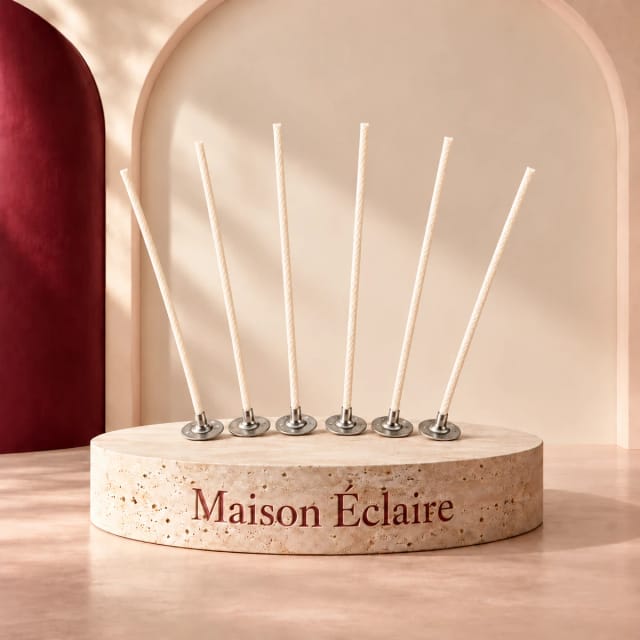
Ready-to-use cotton wick
Cut to 15 cm, waxed and sold in packs of 100, in two sizes: no. 27 (5 MAD) and no. 40 (– MAD). The easiest choice for beginners: just fix it in the middle of the jar. No. 27 is the one in our beginner kit, for 200 ml jars.
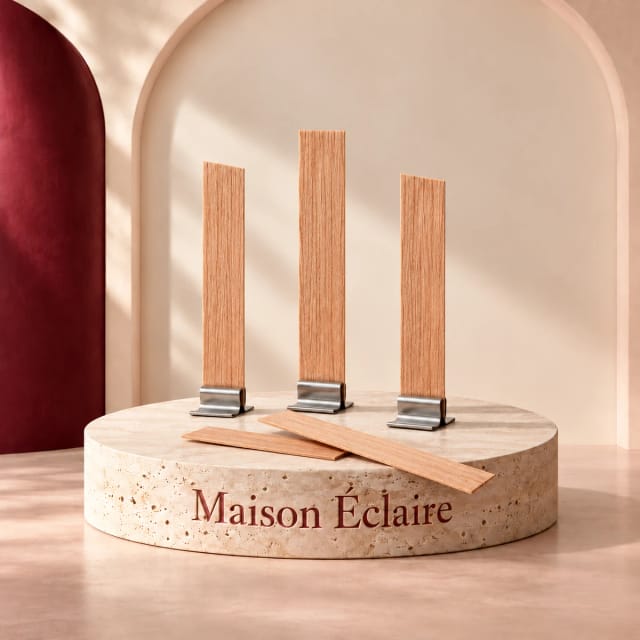
Wooden wick
Sold with its holder (6 MAD), it gives a wide, low flame and crackles softly, like a small wood fire. It suits container candles in plant wax such as soy wax 4130. It is a little harder to tune than cotton, so test before a batch.
Our advice: start with cotton, which is easier to tune. Move to wood once your jar candles are right and you want the crackle.
Which wick size for which diameter?
It is the candle's diameter, not its height, that guides the choice. Measure the inside of the jar or mould, then start from these guidelines:
| Candle | Wick | Price |
|---|---|---|
| Small and medium candles (jars up to 200 ml) | Cotton no. 27, or braided no. 3 | 5 MAD per 100 (no. 27), 53 MAD per 10 m (no. 3) |
| Wider candles | Cotton no. 40 | – MAD per 100 |
| Very large candles | Several wicks spread over the surface | – |
These are starting points, not rules: the wax and the amount of fragrance change the result. A hard wax like 4120 or fragrance at 10 % often needs one size up. All our wicks are on the candle wicks page.
For a very wide candle, several wicks spread over the surface often melt it better than one very thick wick.
Setting and centring the wick
Cut the right length
Count the candle's height plus 2 to 3 cm. With 10 m of braided wick you can make about fifty candles 15 cm tall.
Weigh it down
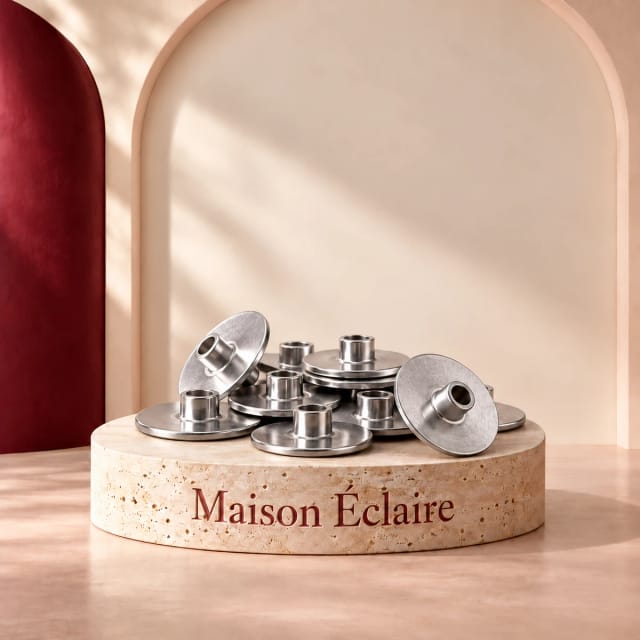
Slide the end of the wick into a metal wick base and crimp it: the wick stays at the bottom when you pour.
Stick it in the centre
Fix the base to the bottom of the jar with a double-sided sticker. An off-centre wick melts one side only and heats the glass.
Keep it straight
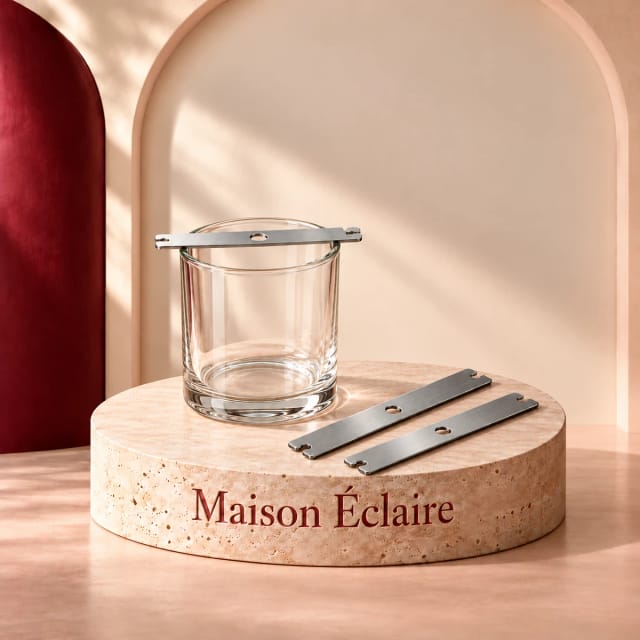
While the wax cools, hold the wick with a centring bar laid across the jar. Remove it once the wax has set, then trim the wick to about 5 mm.
Tunnelling, smoke, a drowning flame: common problems
The candle tunnels
The wick is too thin for the diameter, or the first burn was too short. Let it burn until the whole surface is liquid, and use a thicker wick next time.
The candle smokes or blackens the jar
The wick is too thick or too long. Trim it to about 5 mm before each lighting; if the flame stays tall, go one size down. A black ball at the tip of the wick is another sign it is too long.
The flame drowns in the wax
The wick is too thin, or too much fragrance weighs the wax down. Stay between 5 and 10 % fragrance and go up one wick size.
The flame leans or melts one side
The wick is off-centre or the candle sits in a draught. Centre it with the bar when pouring, and light the candle away from draughts.
The burn test
Before pouring a batch, make a test candle. Let it rest at least 24 hours (one to two weeks if it is scented), then burn it for two to three hours: the wax should melt to the edge without the flame smoking. Note the result, the wax, the fragrance load and the wick: that is your recipe.
Next, read which wax to choose for your candles and our step by step to make a scented candle at home.
Our wicks and accessories arrive in 2 to 3 days anywhere in Morocco, with the wax and fragrances of your order. Free delivery from 450 MAD, minimum order 70 MAD, cash on delivery.
Frequently asked questions
Which wick for a 200 ml candle?
A ready-to-use no. 27 cotton wick, the one in our beginner kit, or the braided no. 3. Always do a burn test.
Cotton or wooden wick?
Cotton is the easiest to tune and works with every wax. Wood gives a wide flame and a soft crackle, popular for container candles in plant wax.
Why does my candle tunnel?
The wick is too thin for the diameter, or the first burn was too short. Use a thicker wick and let the whole surface melt from the first lighting.
Where can I buy candle wicks in Morocco?
At Maison Éclaire, online: cotton wicks by the metre or ready to use, wooden wicks and accessories, from 5 MAD, delivered in 2 to 3 days anywhere in Morocco.
Products used
The products mentioned in this guide, at today's prices.
Waxed wick 15 cm
5.00 – 100.00 MAD
Wooden Wick
6.00 MAD
Wick Sustainers
60.00 – 290.00 MAD
Wick Centering Bar
60.00 MAD
Read next
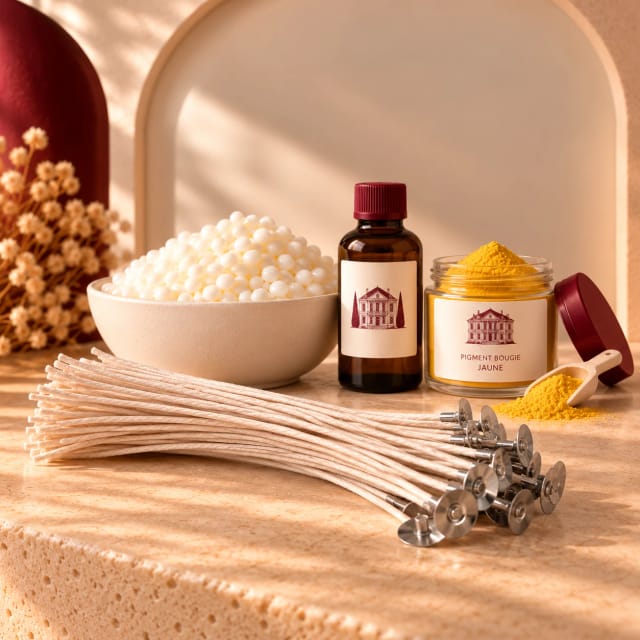
How to make a scented candle at home, step by step
The supplies, the right temperatures, how much fragrance, pouring and curing time: our workshop method, step by step.
Read the guide
How many candles from 1 kg of wax?
The simple formula, a table for 100 to 250 ml jars, and the real cost of a 200 ml candle worked out from our prices.
Read the guide
Which wax should you use to make candles?
Soy 4130, 4120 or 46, paraffin, rapeseed, beeswax, gel: what each wax is for, and which one to use for a jar or a moulded candle.
Read the guide