Which wax should you use to make candles?
There is no single "best" wax, only the right wax for each candle. A candle poured into a glass needs a different wax from one that comes out of a mould and stands on its own. Here is how we choose in our workshop, and a comparison of every wax we sell, with its price per kilo taken from our catalogue.
The short answer
- You are starting out with candles in jars: soy wax 4130.
- You pour into a silicone mould (pillar, shape, wax melt): soy wax 4120.
- You want a clear candle with decorations inside: gel wax.
- Your budget is tight and plant-based is not a priority: paraffin.
Below, the reasons, wax by wax.
Jar or moulded candle: the first question
A container candle (glass, jar, tin, bowl) stays in its vessel. It needs a soft wax that melts at a low temperature, sticks well to the sides and sets with a smooth top. A wax that is too hard pulls away from the glass and leaves marks.
A moulded candle comes out of the mould and must stand on its own. It needs the opposite: a hard wax that melts higher, shrinks a little as it cools so it releases, and does not slump in a warm room. A container wax in a mould gives a soft candle that is hard to get out.
So decide on the kind of candle first; the wax nearly always follows. For moulds, see our silicone candle moulds.
Soy waxes: 4130, 4120 and 46
Soy wax is plant-based, made from soybean oil. It melts at a low temperature, burns slowly and holds fragrance well. It is the wax of our own candles, poured by hand in Casablanca. We sell three grades.
Soy wax 4130: for jar candles
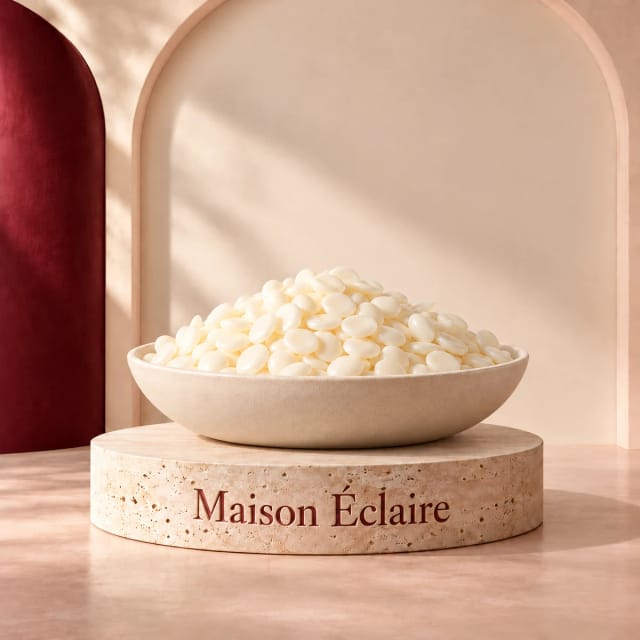
A soft wax in ivory flakes that melts between 42 and 48 °C and sticks well to glass. It pours in one go and is the easiest to start with. It costs 125 MAD per kilo, and also comes in 500 g and 20 kg.
Soy wax 4120: for moulded candles
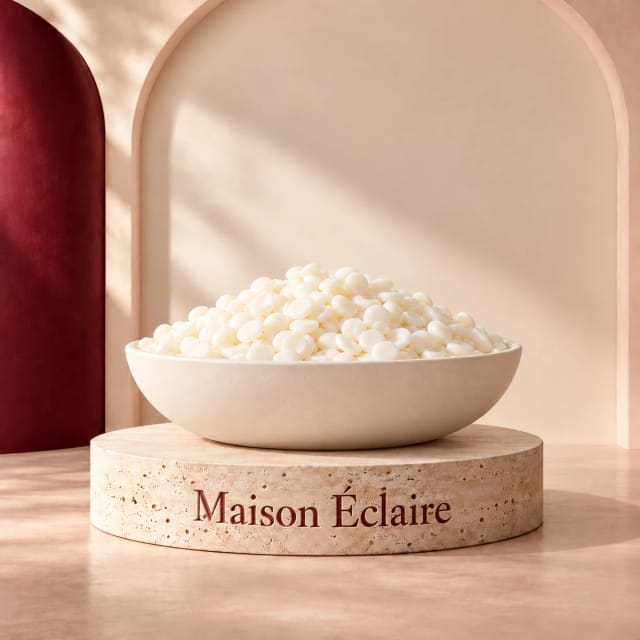
Harder, it melts between 57 and 63 °C, releases cleanly from the mould and stands on its own once cool. It takes colour well. It is the wax for pillars, moulded shapes and wax melts, at 125 MAD per kilo.
Soy wax 46
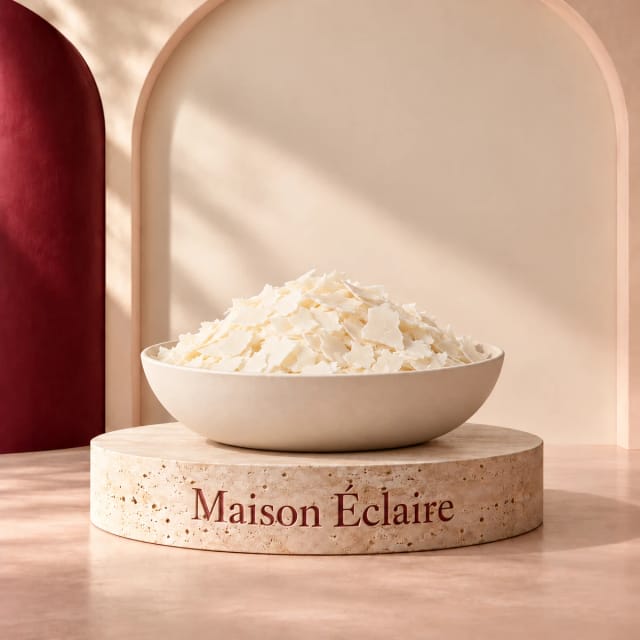
Another plant-based soy wax, sold by the kilo (105 MAD) and in a 17 kg bag (1,230 MAD, about 72 MAD per kilo). The large size suits people who make candles in batches. If you are torn between 46 and 4130 for your container, write to us with the size of your jars.
Paraffin, rapeseed, palm, beeswax and gel
Paraffin
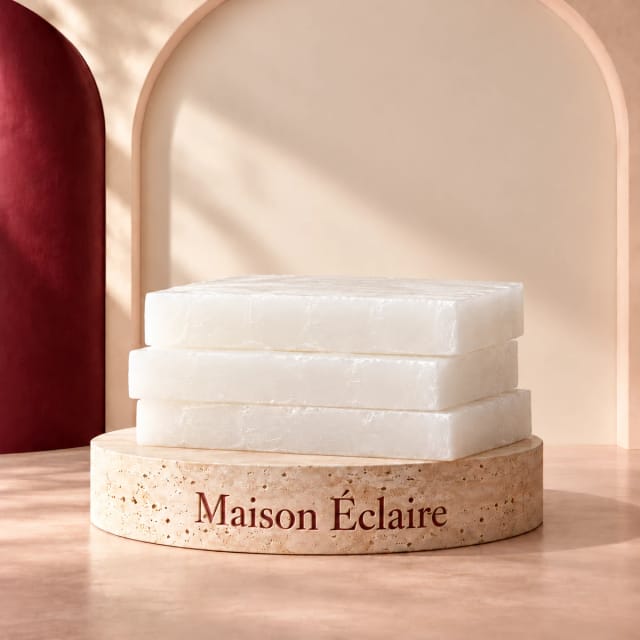
Made from petroleum, it is the most common and cheapest wax: 49 MAD per kilo as a block, 51 MAD as pellets, which are easier to weigh. It gives bright colours and a strong scent, but it is not plant-based. Stearic acid (65 MAD per kilo) is often added to harden it and help it release from moulds.
Rapeseed wax
Plant-based and creamy to the touch, a good alternative to soy. Rapeseed 40 is poured in containers, rapeseed 50 is for moulded candles; both from 120 MAD per kilo.
Palm wax
Plant-based and hard, it crystallises on the surface for a frosted or feathered look. It suits pillars and moulded candles, at 110 MAD per kilo.
Beeswax
Natural, with a faint smell of honey. It is hard and burns for a long time, but it costs much more (220 MAD per kilo) and holds little fragrance. You choose it for itself, not to carry a scent.
Gel wax
Clear as glass: shells, dried flowers or glitter can float inside. It is poured only into a heat-resistant container, at 225 MAD per kilo.
Microcrystalline wax
An additive rather than a base wax (71 MAD per kilo), blended with other waxes to make them more flexible and better at sticking.
Comparison of our waxes
Prices per kilo read from our catalogue as you view this page:
| Wax | Best for | Price per kilo |
|---|---|---|
| Soy 4130 | Jars, glasses, bowls | 125 MAD |
| Soy 4120 | Moulded, pillars, wax melts | 125 MAD |
| Soy 46 | Batches (also in 17 kg) | 105 MAD |
| Rapeseed 40 / 50 | Jars (40), moulded (50) | 120 MAD |
| Palm | Pillars, frosted look | 110 MAD |
| Paraffin | Any, small budget | 49 MAD |
| Beeswax | Natural, lightly scented | 220 MAD |
| Gel wax | Clear, in a container | 225 MAD |
Find all of these, with their sizes, on our candle wax page.
Getting started with your wax
Whatever the wax, the method is the same: melt it in a double boiler to about 70–75 °C without going over 85 °C, add 5 to 10 % fragrance oil off the heat, pour at about 60–65 °C, then let it set for 24 hours. The full step by step is in our guide how to make a scented candle at home.
A harder wax or a wider jar often needs a thicker wick: see how to choose your candle wick. And to know how much to order, read how many candles from 1 kg of wax.
All our waxes ship from Casablanca and arrive in 2 to 3 days anywhere in Morocco. Delivery 25 to 45 MAD depending on the city, free from 450 MAD; minimum order 70 MAD, cash on delivery.
Frequently asked questions
What is the best wax for beginners?
Soy wax 4130, in jar candles. It melts at a low temperature, sticks to glass and forgives small temperature mistakes.
Soy wax or paraffin?
Soy is plant-based, burns slowly and holds fragrance well. Paraffin is cheaper and gives bright colours, but it comes from petroleum. In our workshop we pour our candles in soy.
Which wax for a moulded candle?
A hard wax: soy wax 4120, rapeseed 50 or palm. They release cleanly and stand on their own once cool.
Where can I buy candle wax in Morocco?
At Maison Éclaire, online: soy, paraffin, rapeseed, palm, beeswax and gel, delivered in 2 to 3 days anywhere in Morocco, with cash on delivery.
Products used
The products mentioned in this guide, at today's prices.
Soy Wax 4130
65.00 – 1940.00 MAD
Soy Wax 4120
65.00 – 1940.00 MAD
Soy Wax 46
105.00 – 1230.00 MAD
Paraffin Wax
49.00 – 715.00 MAD
Read next
How to make a scented candle at home, step by step
The supplies, the right temperatures, how much fragrance, pouring and curing time: our workshop method, step by step.
Read the guideHow many candles from 1 kg of wax?
The simple formula, a table for 100 to 250 ml jars, and the real cost of a 200 ml candle worked out from our prices.
Read the guide
Which wick should you use for a candle?
Cotton or wood, which size for the candle's diameter, how to centre it, and what to do when a candle tunnels or smokes.
Read the guide